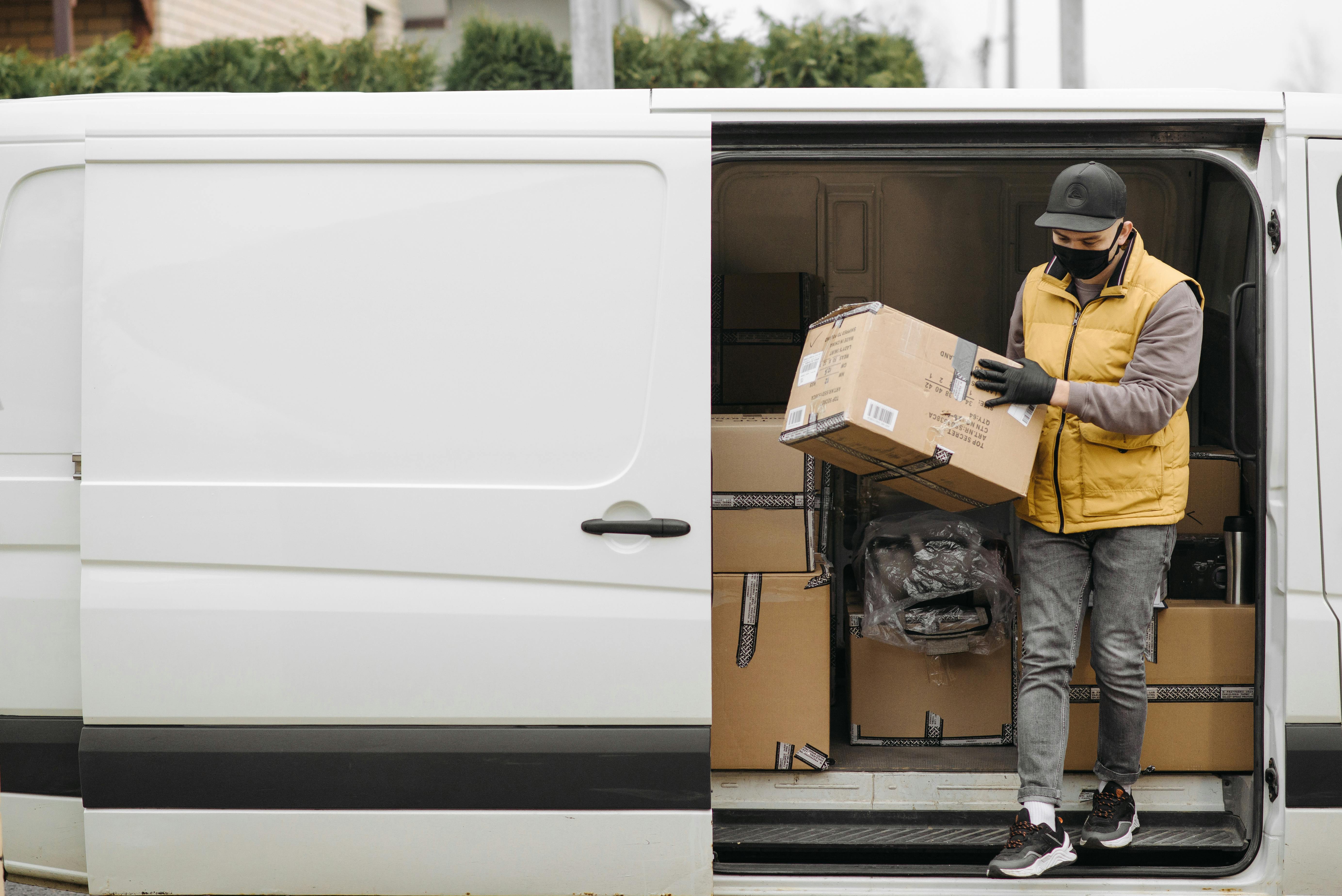
Real-time route insertion cuts last-mile CO2 by replacing a dedicated, often near-empty same-day delivery trip with an insertion into a vehicle's route that's already running. Anteam Route+™ delivers up to 85% CO2 savings per AI-matched delivery, validated in a pilot with NHS hospitals and a national UK pharmacy chain, with the methodology independently audited by Nottingham Trent University.
Why Last-Mile Trips Are Disproportionately Carbon-Heavy
Last-mile delivery already carries an outsized share of transport emissions relative to the distance it covers (life cycle study, ScienceDirect). A short, urgent, dedicated trip for a single order is one of the least efficient ways to move freight: the vehicle covers the same fixed costs, fuel to start the engine, distance to and from the depot, regardless of how little it's carrying.
How Insertion Avoids That Trip Entirely
Static routing plans every stop the night before, so any order that arrives after planning has to wait for the next batch or go out as a separate trip. Dynamic route insertion removes that cutoff: a new order is checked against every vehicle's remaining stops in real time, and if it fits without breaking existing delivery windows or capacity, it's inserted into the route the vehicle is already driving. No dedicated trip means no additional distance, fuel or emissions beyond the marginal detour.
What Determines How Much CO2 a Given Insertion Saves
The saving scales with how much of the alternative dedicated trip gets avoided: a same-day order that would otherwise require a return journey from the depot saves more than one that would have shared a trip with other nearby orders anyway. Route+ only surfaces a match where the detour cost in distance, time and capacity is smaller than the value of avoiding the separate trip, so every match it makes represents a real, not marginal, emissions saving.
Frequently Asked Questions
How does inserting orders into existing routes reduce CO2, specifically?
It avoids a dedicated, often near-empty trip for every same-day order by fitting it into a vehicle's remaining path instead. Anteam Route+ delivers up to 85% CO2 savings per AI-matched delivery this way, validated in a pilot with NHS hospitals and a national UK pharmacy chain.
Why does last-mile delivery matter so much for transport emissions?
Last-mile delivery already carries an outsized share of transport emissions relative to the distance it covers, according to a life cycle study published in ScienceDirect, because short, frequent, often part-loaded trips are inherently less efficient than longer consolidated ones.
Has the CO2 reduction figure been independently verified?
Yes. Route+'s CO2 reduction methodology has been independently audited by Nottingham Trent University, and the underlying matching algorithm is patent-pending.
Real-Time Insertion, Measured
Anteam Route+™ fits same-day orders into routes already running, cutting CO2 by up to 85% per matched delivery. Book a demo to see it against your own delivery windows.
Related reading: dynamic route insertion explained, and same-day pharmacy and NHS delivery routing for a use-case walkthrough.