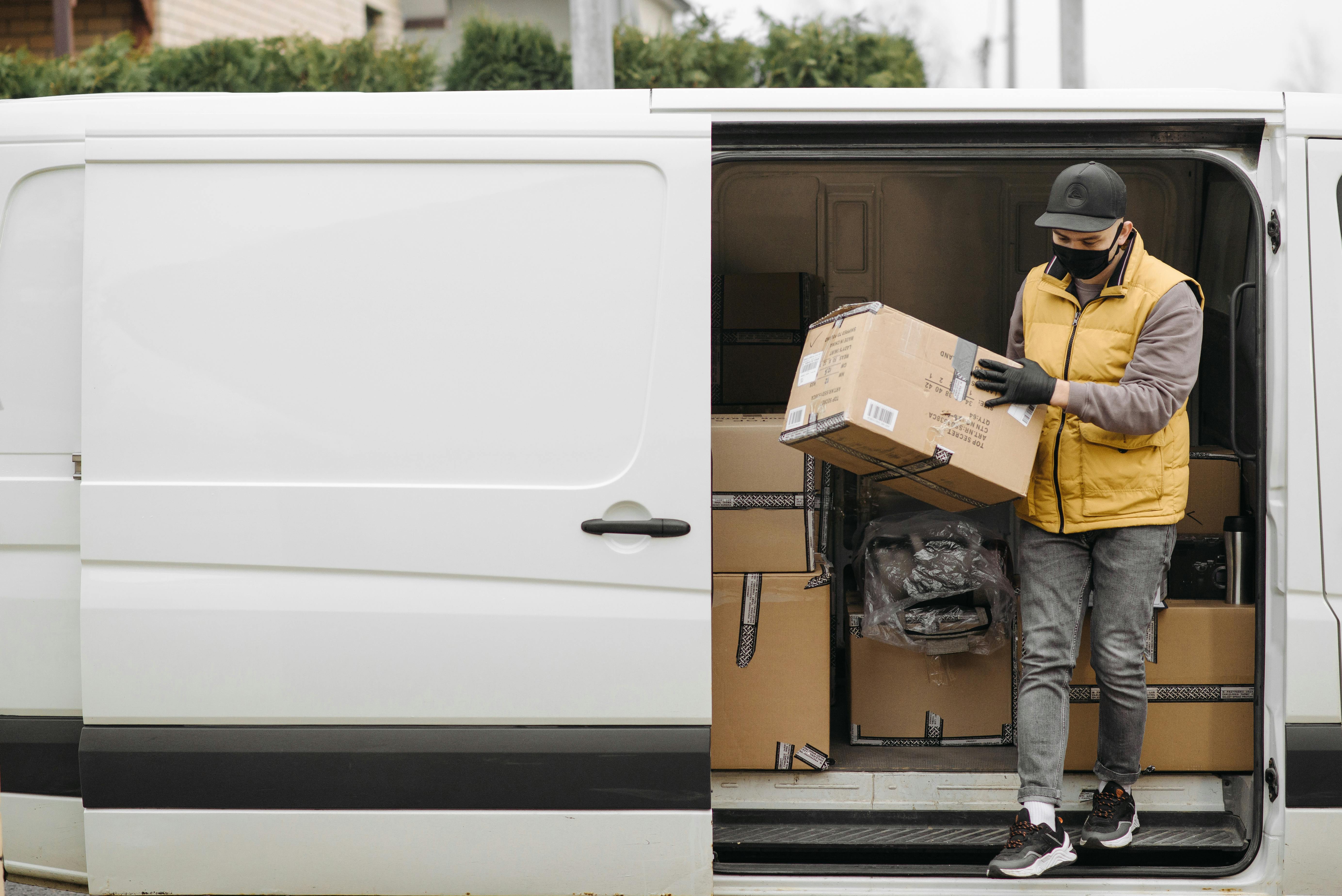
Dynamic route insertion is the process of adding a new, same-day order into a route that's already been planned or is already running, without waiting for the next planning cycle to fit it in. Instead of a route being fixed once at the start of the day, it stays open: a new delivery request that fits a vehicle's remaining path gets slotted in, in real time, while the route is still being driven.
Static Routing vs. Dynamic Route Insertion
Static routing plans every stop in advance, usually the night before or first thing in the morning, and the route stays fixed once a driver sets off. Any order that arrives after planning has to wait for the next batch, the next day, or a separate, less efficient trip on its own.
Dynamic route insertion removes that cutoff. Orders that arrive mid-route are continuously checked against every vehicle's remaining stops, and if one fits without breaking existing delivery windows or capacity, it gets inserted into the route the vehicle is already driving.
Why This Matters for Time-Critical Deliveries
The gap between static and dynamic routing matters most where delivery timing is genuinely urgent, not just preferred. A same-day pharmacy order, an urgent hospital delivery, or an order that only came in after the morning routes were locked in are exactly the cases a static route can't absorb without a dedicated, often empty-adjacent trip. Last-mile delivery already carries an outsized share of transport emissions relative to the distance it covers (life cycle study, ScienceDirect), which makes every avoidable dedicated trip a real cost, not a rounding error.
Insertion has to happen fast enough that the driver's schedule isn't disrupted, and it has to be selective: not every late order is worth a detour, only the ones where the added distance is small relative to the delivery gained.
How Route+ Handles Insertion
Anteam Route+ runs this matching continuously across a fleet's live routes: for every new order, it checks which vehicles have a route it could realistically fit into without breaking existing delivery windows, calculates the added distance, and only inserts the order where the detour is worth it. The pilot ran across 1,000+ vehicles and 1,000+ routes a day, totalling more than 100,000 weekly deliveries, so the matching had to hold up at real operational scale, not just on paper.
| Metric | Result |
|---|---|
| Same-day deliveries matched to existing routes | 61%+ |
| CO2 savings per matched delivery | 85% |
| Fleet utilisation increase | 15% to 40% |
The CO2 reduction methodology behind these figures has been independently audited by Nottingham Trent University, which matters for a metric this easy for a vendor to inflate without scrutiny.
What to Look for in Dynamic Routing Software
| Question to ask | Why it matters |
|---|---|
| Does it insert orders mid-route, or only re-plan overnight? | Same-day orders are only useful if they can be added before the vehicle finishes its route |
| Does it respect existing delivery windows? | An insertion that breaks an earlier commitment isn't a win |
| Has it been validated at real operational scale? | A model that works on a handful of routes may not hold up across a full fleet |
| Are the reported savings independently audited? | CO2 and efficiency figures are easy for a vendor to inflate without third-party scrutiny |
Frequently Asked Questions
What's the difference between static and dynamic route insertion?
Static routing plans every stop in advance and the route stays fixed once a driver sets off. Dynamic route insertion continuously checks new, same-day orders against every vehicle's remaining stops and inserts them mid-route if they fit.
How much can dynamic route insertion reduce emissions?
In a government-backed pilot with NHS hospitals and a national UK pharmacy chain, Anteam Route+ delivered 85% CO2 savings per AI-matched delivery, with over 61% of same-day deliveries successfully inserted into existing routes.
Is dynamic route insertion only useful for time-critical deliveries?
It matters most where delivery timing is genuinely urgent, such as same-day pharmacy or hospital deliveries, but any fleet handling orders that arrive after routes are planned can benefit from being able to insert them mid-route instead of running a separate trip.
Routing, Measured
Anteam Route+™ is patent-pending dynamic route insertion software, matching same-day orders to routes already running in real time. It's been validated with NHS hospitals and a national UK pharmacy chain, not just modelled in a lab. Book a demo to see it against your own routes.
Related reading: the same real-time matching problem shows up in backloading, and the same "too much to track by hand" failure mode shows up in manual freight quoting.